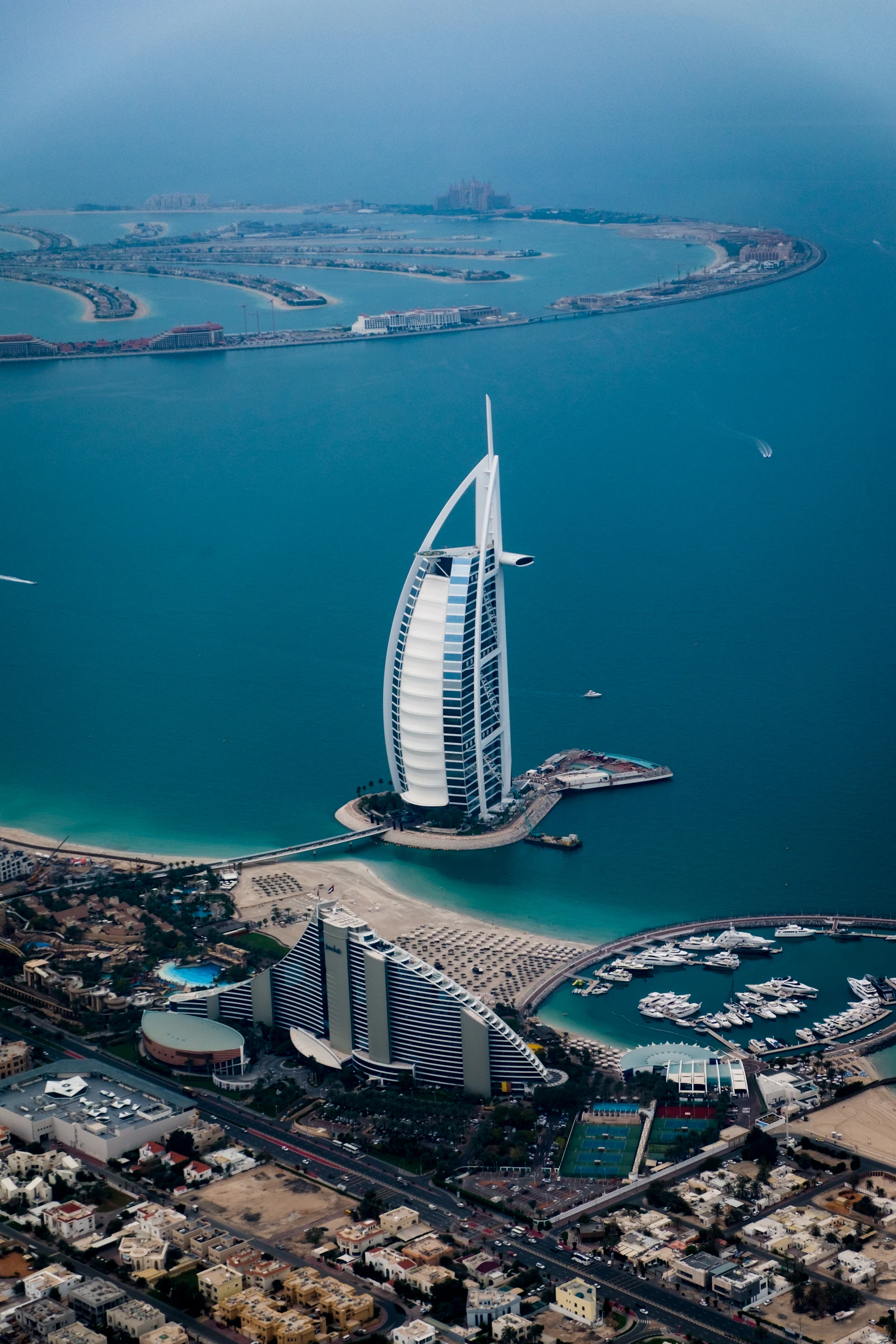
Dubai did not become the world's busiest luxury property market by accident. It was engineered — through law, infrastructure and relentless ambition — to be the easiest place on earth for international capital to own a home. For African investors in particular, the combination is hard to ignore: a stable, dollar-pegged economy a single direct flight from Accra, where what you earn from your property is yours to keep.
01The tax case: what you keep
Start with the headline that draws most investors in: Dubai levies no personal income tax on rental income, no capital gains tax when you sell, and no annual property tax on what you hold. The main costs of ownership are a one-time 4% transfer fee to the Dubai Land Department at purchase and annual service charges for the building or community.
Compare that with most global cities an African investor might consider — London, Toronto, New York — where rental income is taxed, gains are taxed, and annual levies accumulate. Over a ten-year hold, the difference compounds dramatically. In Dubai, a property yielding 6–7% gross keeps most of that yield working for you.
02Freehold, for everyone
Since 2002, foreign nationals — of every nationality, with no residency requirement — have been able to own property outright in Dubai's designated freehold zones. These zones now cover most of the areas an investor would actually want: Dubai Marina, Downtown, Palm Jumeirah, Business Bay, Jumeirah Village Circle and dozens more.
Freehold means your name on the title deed, registered with the Dubai Land Department, inheritable by your family and sellable to any buyer worldwide. For investors from markets where foreign ownership is restricted or murky, this clarity is itself a luxury.
Your name on the deed. Your income untaxed. Your asset in a currency pegged to the dollar. That is the Dubai proposition in one sentence.
03The currency shield
The UAE dirham has been pegged to the US dollar since 1997. For investors earning in cedis, naira or rand, this matters more than almost anything else: a Dubai property is effectively a dollar asset. Rental income arrives in a dollar-pegged currency; the asset's value is quoted in one. For wealth that has watched local currencies slide for a generation, Dubai functions as a store of value first and a property market second.
04The Golden Visa
Property investment in Dubai can open the door to residency. Investors meeting the AED 2 million threshold (roughly USD 545,000, including qualifying off-plan and mortgaged purchases under current rules) become eligible for the UAE's renewable ten-year Golden Visa — covering the investor, spouse and children.
For many of our clients this transforms the purchase: it is no longer just an investment, but a second base — schooling options, banking access, and a Plan B residence in one of the world's safest cities.
05Lifestyle, infrastructure, connection
- Connectivity: direct flights from Accra and every major African hub; Dubai sits within an eight-hour flight of two-thirds of humanity.
- Safety: consistently ranked among the safest large cities in the world.
- Lifestyle: world-class dining, schooling, healthcare and retail — the standard of living that high-net-worth families measure everything else against.
- A real rental engine: a large expatriate population that overwhelmingly rents, plus one of the world's strongest short-stay markets, keeps demand deep across price points.
06The honest caveats
No serious adviser sells Dubai without them. The market is cyclical — it has corrected hard before and will again; we position clients for ten-year holds, not six-month flips. Supply is real: developers deliver tens of thousands of units a year, so location and developer quality matter enormously. And service charges vary widely between buildings — a detail that separates a good yield from a mediocre one. This is precisely where curated, on-the-ground advice earns its keep.
The Pablo position
We recommend Dubai as the international anchor of an African investor's property portfolio: a dollar-pegged, tax-efficient, globally liquid asset — entered carefully, through vetted developers and the right districts, with Ghana holdings providing the home-soil growth alongside it.